- Manufacturing Company
- Certified ISO 9001:2015, ISO 14001:2015
- Manufacturer of Alloys and Components
- Select 200 DGEMS 2025
- Technical Data



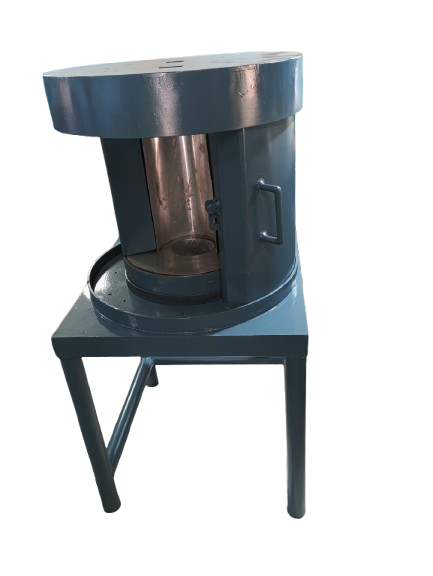
HPGe Detector Shield with Top Cover
HPGe Detector Shield with Top Cover
HPGe detector shields made by typically lead, with inner lining as copper, tin, aluminium, cadmium and outer jacket steelare essential to reduce background radiation, improving the sensitivity and accuracy of environmental, industrial, and nuclear gamma spectroscopy. They minimize external gamma interference and, when combined with liners or active veto systems, reduce cosmic-ray interference.
Key Uses and Functions:
-
Background Reduction: : Lead shields, often 10-15 cm thick, significantly reduce background gamma radiation from surrounding buildings and materials, lowering the Minimum Detectable Activity (MDA).
-
Material Protection: Shields, including neutron shielding like Borated Polyethylene (BPE) or Lithium Polyethylene (LiPE), protect the detector crystal from damage in high-flux environments, such as Prompt Gamma Neutron Activation Analysis (PGNAA) facilities.
-
Enhanced Sensitivity: By reducing the "back signal," shielding allows for the detection of very low activity levels, crucial for environmental monitoring and radioactive waste monitoring.
-
Radon Reduction: Flushing the internal volume of the shield with nitrogen helps eliminate radon gas, further lowering the background.
-
Whole-Body Counting: Special "shadow shield" beds are used to monitor internal contamination in workers, using the detector's high resolution to identify radionuclides.
Common materials used for HPGe shielding include lead (outer shield) and copper (inner lining to absorb X-rays.


Our Certifications